Showing posts with label Sexuality. Show all posts

Friday, April 17, 2015

Mutuality, Solidarity, and Singleness in Corinth: Musings

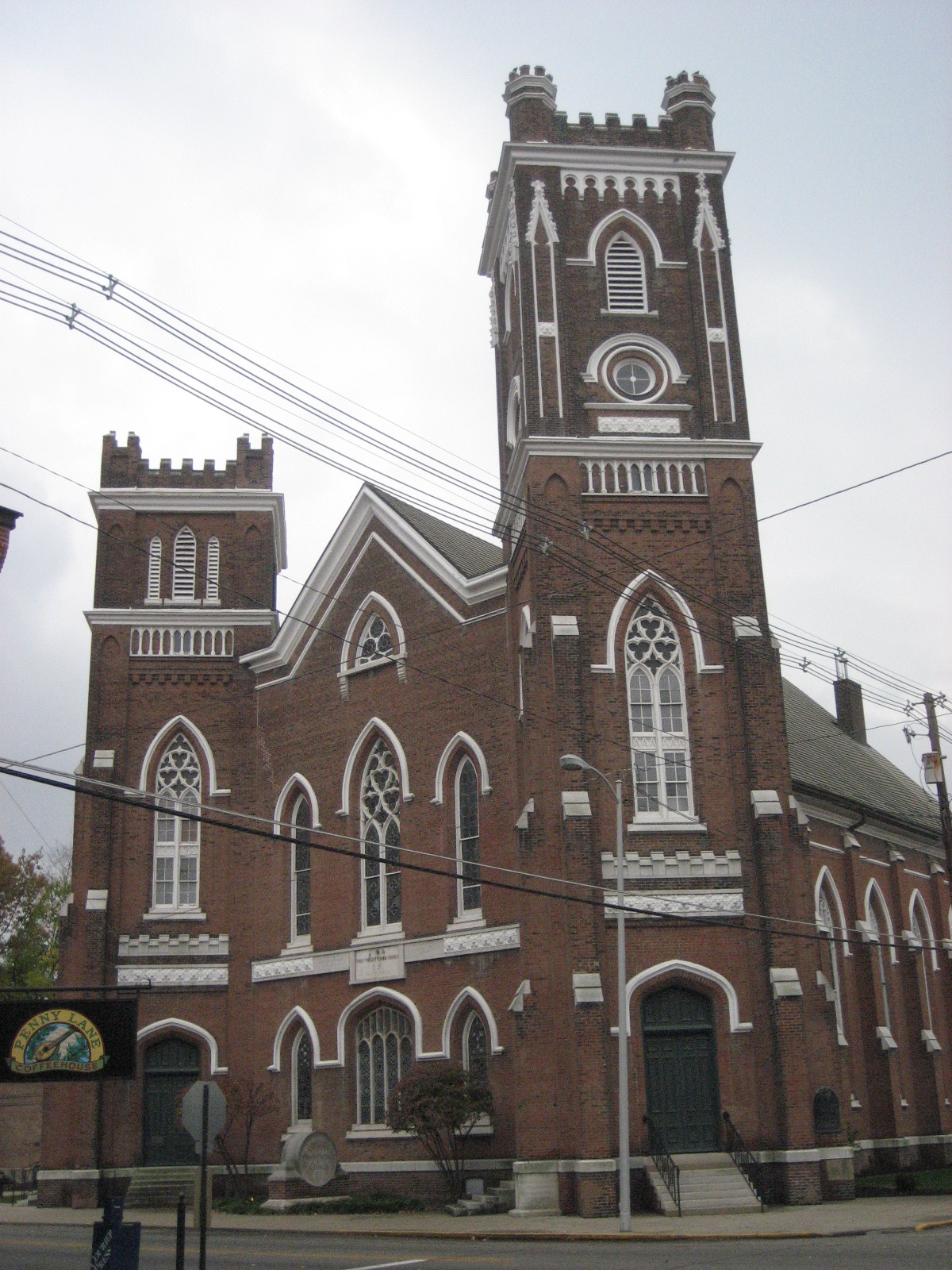
Small Church in Corinth
Corinth was similar in so far as they believed one could be involved in sexual conduct without any repercussions. While many in the church today would not yoke themselves to that, a church—and society—that is steeped in “victimless” pornography is not far removed from the sexual conduct in Corinth.

Another pressing issue for Paul in 1 Corinthians 7 is mutuality in marriage, and singleness for other brothers and sisters. What is more fascinating about this is how Paul presents a picture of husband and wife yielding to one another; in a culture that prioritizes the individual over and against the corporate nature of community, Paul’s admonitions are precise and completely at odds with how the evangelical church functions. In Christian circles, marriage is the prime rib of human experience, and singleness is viewed as a problem. Paul’s preference for both men and women to remain single in the Lord shows us two things: first, Paul did not view singleness as separation from a community of believers, but that they would be united to a community and able to serve more fully as a community. Second, Paul wants both men and women, single or married, to be full participants within the community of Christ. 

We need to encourage singleness in our churches, and maybe demonstrate this as brothers and sisters who embody the single life for the Christians who cannot be married (whether they be gay or straight). Solidarity with the other is a Christian virtue, and we tarnish it by not participating in the life of all the members of our community. Paul is eminently practical here.

NQ

Friday, April 12, 2013

Tim Keller, Sex and the Scandal of Religious Doubt

I've already read multiple posts on this topic, so I figure I'll toss my unsorted laundry into the dirty bathwater that is the blogosphere.

For those who don't know, Tim Keller (a pastor I generally enjoy) spoke at the Gospel Coalition Conference and, well, his comment below made the headlines, summarized beneath.
Keller illustrated the point by talking about a tactic, one that he admittedly said was almost too cruel to use, that an old college pastor associate of his used when catching up with college students who were home from school. He’d ask them to grab coffee with him to catch up on life. When he’d come to the state of their spiritual lives, they’d often hem and haw, talking about the difficulties and doubts now that they’d taken a little philosophy, or maybe a science class or two, and how it all started to shake the foundations. At that point, he’d look at them and ask one question, “So who have you been sleeping with?” Shocked, their faces would inevitably fall and say something along the lines of, “How did you know?” or a real conversation would ensue. Keller pointed out that it’s a pretty easy bet that when you have a kid coming home with questions about evolution or philosophy, or some such issue, the prior issue is a troubled conscience. Honestly, as a Millennial and college director myself, I’ve seen it with a number of my friends and students—the Bible unsurprisingly starts to become a lot more “doubtful” for some of them once they’d had sex.
For the source, here it is.

I admire Keller's honesty so I will be equally as honest. I come from a conservative background and didn't really learn much about the "art" of sex until Bill Clinton made his way into the glad rags at the grocery store. From there, it was much ado about something. Sex became a staunch preoccupation and I soon became an agnostic. However, the sequence is far removed from Keller's suggestion in that I was already on my way to deistic agnosticism when I was roughly 13. For doubt preceeded sexual exploration at that time.

The very interesting thing is that I'm still a virgin, having been with Allison for almost four years. To many people I know, this is odd. To others, I deserve a medal from the President. What I find interesting is the idea of doubt playing a key role in how we doubt or how we find difficulties in the text.

Within the past year, I've discovered textual criticism and found numerous discrepancies in the text of the New Testament. I've found that we don't have the original copies and the Gospels are difficult to harmonize. This happened after I'd made a point of staying faithful to Allison and keeping myself as faithful as possible. Though sex itself is on the mind, doubt and difficulties arose from simple and honest exploration of the text of the New Testament.

I didn't doubt traditional gender roles because I was sleeping around I didn't doubt the nature of eternal punishment because I was sleeping around (I wasn't in case that was abundantly clear).

I doubted them because I found them textually and exegetically inadequate. 

The same for the nature of eternal punishment and the same for varying theories of the atonement.

I doubted simply because I was as honest as I could be with the text. There are many of us who simply arrive at the text, shake our heads and change our minds. This allows nuance and perspective and doubt to spur us on.

Tim Keller is a generous individual, and I doubt that he expects this comment to be universally applicable. In fact, I would be surprised if he did. However, I do worry that his comment may spur on other theologians and pastors to exercise the same type of confrontation, and if this could lead to more problems.

Sex could certainly be a factor for some. But in my personal experience, it has little to do with it.

For those interested in a similar but more in-depth perspective, enjoy Micah's post.

--Nick

Tuesday, April 2, 2013

Sex as Redemptive: Sacraments, Trent Reznor and Getting Closer to God

As most guys are prone to do, I spent around 2 hours talking with a good friend of mine about the sacrament of sex within marriage and within society. The topic veered from what the expectation is with the man in the relationship and how that translates to authority to the current hot potato of same-sex marriage, and then to something interesting.

I paused and asked a simple question that we spent the final hour unpacking:

"Is sex redemptive?"

My initial question was predicated around the idea that society has constructed sexual ideals to fulfill a specific genders desire. Women are generally submissive in most ways except in the marriage bed, and men are generally told to conquer their women (in a Christ like way). This simply is what is.

But I think the spark revolved within the concept of a broken humanity, struggling for identity and unity in a grieved creation. We see this in Genesis, as humanity as male and female seems to constitute the image of God, as one yet distinct yet embodied in love. I do wonder what sex was like before things got really bad, and where it went wrong.

This is speculation, but something tells me that the reference to the man "ruling" his wife seems to be not only a result of the fall but also a potential division in sexual intimacy and unity. Which is far more terrifying than I'd care to picture.

And so the story brings itself to us.

Maybe its the fact that I may be getting married sometime soon, or maybe I'm more interested in consequences. However, I boiled it down to something the great theologian Trent Reznor screamed in a song:
You get me closer to God.
Something tells me Friar Reznor is far closer to the truth than maybe he would like to admit.

Maybe in this state sex is something that, if done within a specific context, can reveal something of what God first desired.

Maybe sex is something that reveals a glimpse of God and the character embodied therein.

Maybe -- just maybe -- sex, as a God-given trajectory, showcases the first hints of the Kingdom, and the return to what once was.

And so the story continues.

--Nick

Saturday, July 7, 2012

Presbyterian Church Barely rejects Same-Sex Marriage

Washington Post:
The Presbyterian Church (U.S.A.) narrowly rejected a proposal to revise the traditional definition of marriage on Friday, a year after it struck down a barrier to ordaining gays.

The Presbyterian General Assembly, meeting in Pittsburgh, voted 338-308 against changing how marriage was defined in the church constitution from a “civil contract between a woman and a man” to a “covenant between two people.” The assembly also rejected measures that would have affirmed a traditional definition of marriage or sought more theological study of the issue.

Other mainline Protestant churches have approved gay ordination or have permitted individual congregations to celebrate same-sex unions in recent years. The U.S. Episcopal Church, which is holding its national convention through next week in Indianapolis, will consider official prayers for blessing same-sex unions. However, only one major Protestant denomination, the United Church of Christ, has endorsed same-sex marriage outright.

The Presbyterian Church (U.S.A.), like many Protestant groups, has debated for decades whether the Bible prohibits same-sex relationships. The discussion has focused mainly on whether to ordain gays and lesbians who aren’t celibate. But as gay acceptance has grown in the broader culture, marriage has become a larger part of the church discussion of homosexuality.

Six states and the District of Columbia have legalized gay marriage and three more could do so this year, but 30 states have passed constitutional amendments limiting marriage to unions of a man and a woman. Throughout debate on the measure Friday, Presbyterian clergy from states where gay marriage is legal said they have been inundated with requests to officiate at same-sex weddings and were upset that they had to risk prosecution in church courts to preside at the ceremonies.
 For the entire article, click HERE.

--Nick

Thursday, June 21, 2012

John Piper and the Gay Marriage Amendment

Star Tribune:
Two key conservative evangelical leaders in Minnesota are not endorsing the marriage amendment or directing followers to vote for it, marking the first time during debate over the measure that major faith leaders have not encouraged members to take a stand on the issue.

Influential preacher and theologian the Rev. John Piper came out against gay marriage during a sermon Sunday but did not explicitly urge members of his Minneapolis church to vote for the amendment.

The Rev. Leith Anderson, former Minnesota Gov. Tim Pawlenty's longtime pastor, also said this week he does not plan to take a public side on the amendment, which would change the state Constitution to define marriage as a union between a man and a woman.

Religious observers say the lack of formal backing from the two influential figures could signal that evangelical leaders in Minnesota are taking a less active role in supporting the amendment -- a marked departure from evangelicals in dozens of other states where similar amendments have passed.
"Don't press the organization of the church or her pastors into political activism," Piper said during his sermon, posted on Bethlehem Baptist Church's website. "Expect from your shepherds not that they would rally you behind political candidates or legislative mandates, but they would point you over and over again to God and to his word."

Piper had been under pressure from conservative groups to weigh in on the amendment, according to his spokesman David Mathis, adding that Piper did not hold back over concerns the church could lose its tax-exempt status.

"Basically our position is, we're not taking one as a church," Mathis said. "And by addressing this in June rather than October or early November, there's no effort here for political expediency, trying to get certain votes out of people."

"He [Piper] wants to avoid the political realm as much as possible. The Christian Gospel is not left, it's not right. It is what it is."

President of the National Association of Evangelicals, Anderson stepped down in December as senior pastor of Wooddale Church in Eden Prairie and said it's inappropriate to take a stand on the amendment because he's no longer an active pastor. Anderson noted he stated his opposition to same-sex marriage in a 2004 pastoral letter to Wooddale congregants.

"When churches start getting really politically engaged, they often lose focus over what is their primary mission," Anderson said in an interview.

"There are appropriate times to do it [be politically engaged]. I think churches should, but they need to be careful about what they do. I especially think churches should seek to be nonpartisan in their approach to teaching moral truths."

The Rev. Mark Poorman, senior pastor at Woodcrest Baptist Church in Fridley, said he has encouraged his congregants to vote for the amendment and is disappointed Anderson and Piper won't join him.

"It would have been nice to hear him [Piper] be a little more dogmatic."
I confess, I'm surprised to hear another pastor ask Piper to be more dogmatic. Good for Piper. It sounds like he has been taking cues from Greg Boyd. ;)

Question:

How involved should Pastors be in regards to politics?

For the rest of the article, click HERE.

--Nick

Saturday, June 9, 2012

TheoPerspectives, "Sacred Sex, Celibacy & the NT"

Goetz:
During the days of Christ, Jews debated about the two rabbinical views of divorce taught in the school of Hillel and the school of Shammai. Hillel taught that a Jewish husband could divorce his wife for any reason and Shammai taught a husband could divorce his wife only in the case of a sexually immorality. Likewise, in the case of divorce, Christ sided with the school of Shammai.

Christ also used this opportunity to teach about marriage. He referred to Genesis 1:27 and said that God made humans both male and female. Then he referred to Genesis 2:24 and said a man should leave his parents and join his wife to become one flesh, which refers to marriage and sexual union between a husband and wife. Based on these precedences, Christ proclaimed that nobody should divorce.

The Pharisees then asked why Moses commanded to give certificates of divorce. Christ replied that the biblical law about certificates of divorce was written for the hard-hearted Israelites. That biblical law was an accommodation apart from the biblical model taught in Genesis 1—2. Christ then clarified that nobody should divorce his spouse except for a severe violation such as adultery. Christ also taught that remarriage after divorce for a non-severe violation was adultery. For example, a no-fault divorce is invalid in the eyes of God while God requires such a divorcee to remain faithful to his spouse. 
For the rest, click  HERE.

--Nick

Wednesday, May 23, 2012

Fundamentalist Christians, Gays & Electric Fences?

Oh my. I thought this was from Cracked. Or the Onion. Or the Huffington Post right beside the Kim Kardashian boob pictures.

Oh. Wait.

Anyway. This is spiritually painful. Even if one doesn't accept same-sex marriage, this still strikes me as unChrist-like.

Huff Po:

The barrage of anti-gay sermons delivered by North Carolina-based pastors to hit the blogosphere continues with yet another disturbing rant caught on tape. 

The pastor, identified on YouTube as Charles L. Worley of Providence Road Baptist Church in Maiden, N.C., condemns President Obama's much-publicized endorsement of same-sex marriage while calling for gays and lesbians to be put in an electrified pen and ultimately killed off.
"Build a great, big, large fence -- 150 or 100 mile long -- put all the lesbians in there," Worley suggests in the clip, reportedly filmed on May 13. 

He continues: "Do the same thing for the queers and the homosexuals and have that fence electrified so they can't get out...and you know what, in a few years, they'll die out...do you know why? They can't reproduce!"

He also said that if he's asked who he'll vote for, he'll reply, "I'm not going to vote for a baby killer and a homosexual lover!" Many of the congregants cheer and reply, "Amen." 

Worley added, “It makes me pukin’ sick to think about -- I don’t even whether or not to say this in the pulpit -- can you imagine kissing some man?”
 
The pastor's comments seem in line with statements made by Ron Baity, founding pastor of Berean Baptist Church in Winston-Salem and head of the anti-marriage equality organization Return America, who told his own congregation that lesbian, gay, bisexual and transgender (LGBT) people should be prosecuted as they were historically, and Pastor Sean Harris of the Berean Baptist Church in Fayetteville who advocated parents "punch" their male child if he is effeminate and "crack that wrist" if he is limp-wristed. 

For the rest, click HERE.

--Nick

"Who Says Homosexuality is a Sin?" Part I


Josh Gould wrote this. The picture has little to do with this, but I thought the picture was funny by itself. ;)

There’s an ancient quote that says, “any interpretation of scripture which leads to hatred or disdain of other people, is illegitimate.” Some of you might recognize this quote from The Charter of Compassion that was launched a few years ago by Karen Armstrong. Rabbi Meir Baal Hanes who lived during the second century first uttered it and made it famous. St. Augustine also came to the same conclusion, but said it in different words.

So what does this have to do with homosexuality? Well, it doesn’t take much effort to see how evangelical Christians oppress and discriminate against someone who identifies as homosexual. These Christians claim that marriage is between one man and one woman and that anything else would destroy the sanctity of marriage, as God established in the Bible. They go out of their way to stand up against issues like same-sex marriage to the point where they pass amendments to ban such an idea. The media especially enjoys plastering their networks with video and pictures of people holding up signs that say, “God hates fags” and “God says fags should die.” Where do they get these ideas from and how can they be so bold as to speak on God’s behalf?

These ideas and interpretations about what God speaks through the Bible come from a place of hatred and, according to Rabbi Meir, this makes them illegitimate. But what exactly are they interpreting? Within the pages of the Bible, there are six verses that are commonly used across the board by Christians opposed to homosexuality: three in the Old Testament and three in the New Testament. Let’s take a look at the one that is arguably the strongest, most used verse in the Old Testament. We’ll find this verse in chapter 18 in the Book of Leviticus. It might be helpful to follow along in your own Bible, so feel free to turn there and skim down to verse 22. It reads, “do not have sexual relations with a man as one does with a woman, it is detestable” (TNIV). Before we begin breaking down the verse, a little context on Leviticus might be helpful.


For the rest, click below.

TheGodArticle.

--Nick

Sunday, May 13, 2012

Biola Queer Underground, some thoughts


Dear Biola Administration and Community,

First of all, thank you for your ongoing work to make this university an important, beautiful place. We appreciate your sacrifice to make Biola's mission a reality - "equipping men and women [and other] in mind and character to impact the world for the Lord Jesus Christ."

Let us make clear the purpose of this website. Please understand that our goal is not to change, disrespect, or rebel against the mission or values of this university. This project is a compilation of many individuals; therefore one piece does not necessarily reflect the feelings of all involved. While this letter does not speak for everyone in Biola’s LGBTQ community, the majority of us hold similar values to those which Biola is founded on. We chose to attend and be employed at Biola, and desire to finish our education here and continue our service. Know that this is a big risky step for us.

The purpose of this website is multi-dimensional:

1.We want to bring to light the presence of the LGBTQ community at Biola. Despite what some may assume, there are Lesbians, Gays, Bisexuals, Transgender, and Queers at Biola. We are Biola's students, alumni, employees, and fellow followers of Christ.

2. Biola's value statement reads, “We believe that integrity and authenticity should be hallmarks of every believer. Our relationships should be models of transparency, truth-telling and unwavering commitment to the example set by the Lord Jesus Christ.” Although Biola may have good intentions in the way it handles homosexuality and related subjects, this does not foster the desired outcome of integrity and transparency among LGBTQ individuals. We speak for our majority in saying that most LGBTQ people feel isolated and fearful of rejection should we act with integrity and come out of the closet. Biola needs to take a close look at its fundamental values, first to question whether they are carried out, and second to discuss if identifying as LGBTQ is in fact contrary to these values.

3. We want to be treated with equality and respected as another facet of Biola’s diversity. Reconciling faith with non-conforming gender/sexual identities is our most important and difficult goal. This of course will take time. We begin by sharing a few of our personal stories and writings.  

In conclusion, hearts need to be changed not policies, minds opened not handbooks, and love spread where there is division. We unapologetically pursue our purposes with prayer, patience, and humility.

Love,
The Biola Queer Underground
Me:
I'm grateful this conversation was brought out. It's been quite interesting to think and reconsider how everything is working. 
There is a lot to be said about this, but a few things as a beginning:
1) Dialogue isn't equated with changing one's mind. All dialogue allows is for the expressing of opinion in the pursuit of truth. One cannot have dialogue if one is so blindly convinced. This applies to traditionalists and gay activists as well. If some want traditionalists to reconsider the data, then the option of being wrong is on both sides to be humble. 
2) Biola is not required to change their mind about anything, being a private university. However, in the manner of Christ, we ought to pursue truth as our priority. This means looking intently to what Scripture says. 
3) I see little reason to not allow gay-advocates to come to Biola to give their opinion, as long as we all transcend comments about "hate-speech and liberal wussies." I think another comment is needed in response to a comeback offered by the Biola Queer Underground. 
3a) What happens if Biola is right? If we are all pursuing truth, and Biola's traditional stance is indeed correct, how will gay-advocates and the Biola Queer Underground respond? It seems to be an uneven demand here. 
3b) I'm willing to reexamine the data to see if it supports same-sex marriage. However, if it turns out the traditional view is correct, what happens? I'm not certain what happens to Christian gay-advocates if they are wrong, especially in relation to their conduct at Biola.


3c) Of course, what if the traditionalists are wrong?
Still thinking about it. For more, go HERE.
--Nick

Saturday, April 21, 2012

TCM, "Would You Only Marry a Virgin? Living Ubuntu"

As usual, my good friend Calvin has a lot to say. To read this would be enriching and challenging for you. Read it.


Confronting The Elephant in the Bedroom of Christianity
I began this article by talking about my friend who faces the dilemma of a Christian culture that holds virginity as one of its highest ideals. The more stories I hear like hers—the more narratives of brokenness and familial shaming I’m told—the more my heart breaks for the individual and for our community of faith.
Anomaly or not, I feel as if a lot of well-meaning Christian men and women hold to a view of human sexuality and purity that is in no way redemptive. Again, culture shapes this more than Scripture. We carry around these attitudes of what we will and won’t accept in a relationship. Some people advocate dating. Some advocate courtship. Some advocate a near Puritanical approach to sex and dating. Some advocate a mutual and responsible exploration of “the other.” Intimately bound up in most approaches taught in the church, even some of the ones I agree with the most, is a sense of individualism and a “What’s in it for me?” attitude. Many single men and women walk around with lists. Topping the list is generally a desire for someone who is pure. Or at least someone who hasn’t gone “all the way.”[1] Some of them hop oneHarmony so some nebulous algorithm can help them make sense of what it is they want. We pay lip service to the idea that God is involved in the mix. But, he’s not really. Of course, we get appropriately indignant when our sincere relationship with God is questioned at this juncture. Not, too indignant, though. We don’t want to appear too esoteric or worse…Pentecostal.
We worship virginity. We bow to it. We raise it up as our standard. We hold it as the Church’s highest ideal. But, it can only be the Church’s highest ideal when firmly attached to an individualistic view of the faith. However, if we hold to a more communal understanding of the faith and take Scripture into account, we begin to get a view of the connections we miss when we’re too close to the tree to see the forest we’re in.
The “I only want a virgin” mantra is to miss the point of the Cross.
Some may scoff at this. Why can’t someone choose who they want and what they’re looking for in that person? After all, if they are to live with this person “until death do we part,” then doesn’t it make sense to live with someone who makes you comfortable? If marrying a non-virgin makes someone uncomfortable, well, they shouldn’t have to live with that. What is more, if one person keeps themselves pure—with maybe a little base-running in there, but getting thrown out at home plate—why shouldn’t they expect the same from a life partner? God calls us to purity and what’s better than two pure people marrying each other and beautifully displaying Christ’s love for the Church?
Far be it from me to throw a wrench in the works, but what if two people with individualistic ideas about life, faith, and love marrying one another doesn’t reflect God like they think it does? What if virginity isn’tsupposed to sit at the top of one’s list of criteria to look for in a mate?
I’m sure some of you are livid at this point. But, I just don’t see virginity at the center of the Gospel. I like Rebecca St. James just as much as the next person, but maybe a generation of “Wait For Me” men and women are tacitly being taught something that isn’t true.
Hosea and Living Ubuntu
Consider the story of Hosea. For all the claims we make of God “guiding our relationships,” when I look at Scripture I have a hard time thinking I’d want him pulling the strings. The more and more I thumb through its pages; the less our declarations seem authentic. When I see God involved in people’s relationships [in the Bible], I see him doing all sorts of things that most of us would never do. Like telling someone to “take to yourself a wife of whoredom and have children of whoredom…” Not only is Hosea told to marry a non-virgin, but a woman he knows ahead of time is going to cheat on him and who is going to bear to him hellspawn. You never hear that story in churches. When they cart the example couple out in front of the youth group with their story of “We waited and we couldn’t be happier…”, I think that maybe we are being disingenuous about the stories the Word of God gives us and only serves to reinforce a negative view of people who have chosen to do otherwise.
The Cross, however, is about more than staying virgins until marriage. I’d even venture that the Cross of Christ isn’t even about your virginity. The Cross—the old rugged cross—is about redemption. And without redemption we are unable to see the world as God sees the world—broken and desperately in need of hope. Hope that gives us new eyes and abolishes a personal faith in favor of a communal faith.
Might I suggest that to enter any relationship with virginity as the highest ideal is to reveal that one is not ready for a relationship at all? It reveals within the individual a spirit of unforgiveness and an “unknowing” of what it means to be human.
In his treatise on forgiveness, Bishop Desmond Tutu speaks of the African Weltsanschauung known asubuntu:
It is to say, “My humanity is caught up, is inextricably bound up, in yours.” We belong in a bundle of life. We say, “A person is a person through other persons.” It is not, “I think therefore I am.” It says rather: “I am human because I belong. I participate. I share.” A person with ubuntu is open and available to others, affirming of others, does not feel threatened that others are able and good, for he or she has a proper self-assurance that comes from knowing that he or she belongs in a greater whole and is diminished when others are humiliated or diminished, when others are tortured or oppressed, or treated as if they were less than who they are.[2]
What does any of that have to do with virginity? Everything.
The story of Hosea is a story of ubuntu. The story of the Cross is a story of ubuntu. And with a new set of eyes, men and women who remain chaste are able to see men and women who do not remain chaste through redeemed eyes. They are able to adopt a more redemptive posture in regards to the mate they chose—choosing not to see what was, but rather what could be…together. They are now able to walk inubuntu, seeing themselves in the other and not diminishing their worth because their choices were different.
Would YOU only marry a virgin? Take our reader poll. 
Conclusion
If you’re still reading this, let me close with stating what I am not saying and reiterating what I amsaying.[3]
First, I am not advocating that virginity is some hopeless, pie-in-the-sky pipedream. I am not saying, “Well, since the statistics are stacked against you, you might as well go out there and do it and do it often. Wrap it up tight.” God has called us to a particular standard of living. While there is room for disagreement on how that standard is walked out in this life, there is a standard nonetheless.
Second, I am not advocating that young marriage is the ideal for everyone. Just as with anything, if taken to the extreme, a solution that works for some might be detrimental if practiced by all.
Now, let me reiterate my main points, so that there is no confusion. As Obama says, “Let me be clear.”
First, I am advocating young marriage for those who feel called to it and for those who cannot control their passion. The two need not be synonymous nor mutually exclusive. Scripture teaches that this is not a sin. If you feel led to do so, you are free to do so.
Second, I want to stress the fact that statistically, the longer one puts off marriage, the higher one’s chances climb of having sex before marriage. This isn’t an excuse. It is not an attempt to pardon people from any type of moral standard impressed upon us by Scripture. I am simply stating a statistical fact. Nothing more. Nothing less.
Third, Christians are called to a standard not just of physical purity, but also of purity of heart. To anubuntu heart. It is from this wellspring that a redemptive posture is made possible to us and available to others. It is through this purity of heart, available only by the renewing of one’s mind, that we are able to see and worship God correctly and see and love our neighbor as ourselves—even a neighbor we are considering dating.[4]

[1] Interestingly, I have talked with people who are in Christian relationships and have myself participated in enough Christian relationships of my own to have discovered that many young men and women rather enjoy “first, second, and third base.” So long as the penis does not penetrate the vagina, many young Christian men and women enjoy as much of each other outside of marriage as they possibly can.
[2] Desmond Tutu, No Future Without Forgiveness (New York: Doubleday, 1999), p. 31.
[3] This is a creative means of saying that if you comment on this article and say something that I am not saying when I have clearly and emphatically stated exactly what I am and am not saying, I will call you out on it. However, if you have read my words and choose to agree or disagree with my point, feel free to dialogue with me on this. I don’t claim to have it all figured out. If you do, please enlighten me.
[4] Is has been pointed out to me that I have taken the long way around in regards to getting to the issue of redemption and I might have treated it as more of an afterthought than as the main point. This was done intentionally as I am currently writing another series on the matter of direct forgiveness and redemption based upon a few films and the worlds of Bishop Desmond Tutu and Christian scholar Miroslav Volf.


TCM/Ubuntu

--Nick

Wednesday, April 4, 2012

Andrew Sullivan, "Jesus and Sex"

I found this interesting, even if I don't agree with Sullivan that much. Always love a perspective.

Sullivan below:

Rod Dreher takes issue with my Newsweek essay. Guess what his main focus is: 
Jesus condemns lust. What is lust? How would Andrew Sullivan define lust? Jesus believes that "sexual immorality" is so serious that it’s the only legitimate reason for divorce. What could Jesus have meant by "sexual immorality" Clearly, unambiguously, Jesus believes in a right way of sexual conduct, and a wrong way — and condemns the wrong way in serious terms. It is completely untenable to say that Jesus was indifferent to sexual conduct. If we want to know more explicitly what kind of sexual conduct Jesus found to be trayf, we should consult his tradition’s teachings, found in the Hebrew Bible. Or you could trust the rabbi Paul, who was a contemporary of Jesus’s.
If you really don’t want to know, because to know is to be responsible, and to be responsible is to have to change your life and die to yourself in ways you prefer not to, well, then you are fooling yourself. It’s as if the Rich Young Ruler went away from Jesus sorrowful, and then wrote an essay later saying that if we really knew Jesus, we would know that he really didn’t mean that one would have to sell all one’s possessions if one wants to have eternal life.
It's revealing that for Rod, sex is the first thing that comes to mind after reading my essay. Which kinda proves my point- which is that in the grand scheme of Jesus' teaching, sex is an extremely minor theme, while the current Catholic and evangelical leadership regards it as a central defining issue.
But the notion that Jesus was a free love kinda guy is also preposterous, and I never wrote otherwise. His sexual radicalism is as extreme as his property radicalism (give away everything, including your home). Take the part of the Gospels Rod cites:
27 “You have heard that it was said, ‘You shall not commit adultery.’[e]28 But I tell you that anyone who looks at a woman lustfully has already committed adultery with her in his heart.29If your right eye causes you to stumble, gouge it out and throw it away. It is better for you to lose one part of your body than for your whole body to be thrown into hell.30 And if your right hand causes you to stumble, cut it off and throw it away. It is better for you to lose one part of your body than for your whole body to go into hell.
31 “It has been said, ‘Anyone who divorces his wife must give her a certificate of divorce.’[f]32 But I tell you that anyone who divorces his wife, except for sexual immorality, makes her the victim of adultery, and anyone who marries a divorced woman commits adultery.
This is a remarkably radical passage - requiring us, if we take it literally, to dismember our bodies because they constantly present a temptation to forget God. My interpretation is that Jesus is warning against believing that because you obey certain religious rules, you are somehow holy. Inside you are probably not. Lust, greed, racism, fear, and tribalism - to take a few aspects of fallen human nature - are innate; and his call is for a total, deep renunication of all of them, not just obeying formal rules like a "certificate of divorce." This is of a piece with Jesus' insistence on interior, personal transformation - not just obedience to religious law.
But in so far as this passage is about sex, it is a total impossibility. Not to feel involuntary sexual attraction is not to be human. The standard is impossible. I mean: try it. Try to have no sexual desires, feelings or moments of attraction. Not try to resist acting on them; but resist even thinking them. That's Jesus' standard. We all fail that standard. We are all therefore adulterers to different degrees. Any man who has ever had a chubby for someone not his wife is an adulterer. Every celibate priest is an adulterer. The Pope is an adulterer. Every Christian who has ever lived is an adulterer.
This is Jesus' radicalism at work, and it points, in my view, not to using government to police and repress sexual desire (as you see in large swathes of the Muslim world). And it does not point to church authorities using the repression of sex as a tool for real power over their flocks (which they then sometimes use for sexual abuse). It points to achieving a level of grace that leaves sexual desire behind entirely - a standard also familiar to other religious or philosophical traditions, like Buddhism.
And recall Jesus' response to an actual condemnation of an adulterer. She is about to be stoned. Does Jesus uphold the law he came to fulfill against the woman? No. He demands that those without sin cast the first stones. And he forgives the woman - while insisting she not sin again. Actually, he does more than forgive. He says:
Neither do I condemn thee: go, and sin no more.
This is the Christian model of sexual morality, it seems to me, as it is of morality in general. Jesus poses an impossible standard and then refuses to condemn an actual tangible human being who fails to reach it. Since we are all completely ridden with sin, we equally have no right to condemn anyone else, even if we are living the most upright lives according to the law. Forgive us our trespasses, as we forgive those who Adulteresstrespass against us.
And in this classic scene in which religious authorities stand ready to deploy their power to punish sin, Jesus does something strange. He physically defuses the dynamic. She is cowering; they are threatening; they demand he uphold the law. What does he do? He sits on the ground and doodles in the dust. He is neither condemned nor condemner. He breaks that circle. He does not condemn. He forgives.
So I am a sinner. So is Rod. We should leave the stones on the ground. But this debate is not about me and Rod anyway. It is about reclaiming the core message of Jesus against the distortions that every age imposes on it. And in so far as I am offering any argument as to how to live one's life when the standard Jesus offered is literally impossible, it is merely to say it is hard, and would be cruel were it not for forgiveness.
I have had good moments in this struggle and terrible, lasting failures. This Lent has forced me to consider my constant failures more than my intermittent moments of grace. That I confess. As a practical matter, I have not had the strength to live as Saint Francis, without possessions, without a home, without sex, without anything but a subsistence diet, reliant entirely on physical labor and begging on the streets as a last resort. I find the secular world fascinating, funny, engaging, enraging, joyful. And I have made compromises in my faith-life - just as our laws make compromises for the crooked timber we make up. That made writing this piece hard; and responding to it difficult. Because I am unworthy to deliver such a message. But if no broken being can speak to the truths he cannot always live up to and has often strayed from, then we would have a great deal of silence.
We should not be comfortable with the compromises our fallen lives compound. But we have to live with them, and keep each one in proper perspective:
Nothing that is worth doing can be achieved in a lifetime;
therefore we must be saved by hope.
Nothing which is true or beautiful or good makes complete sense in any immediate context of history;
therefore we must be saved by faith.
Nothing we do, however virtuous, could be accomplished alone;
therefore we must be saved by love.
No virtuous act is quite as virtuous from the stand point of our friend or foe as it is from our own standpoint;
therefore we must be saved by the final form of love, which is forgiveness.

Sullivan, Sex & Jesus

--Nick