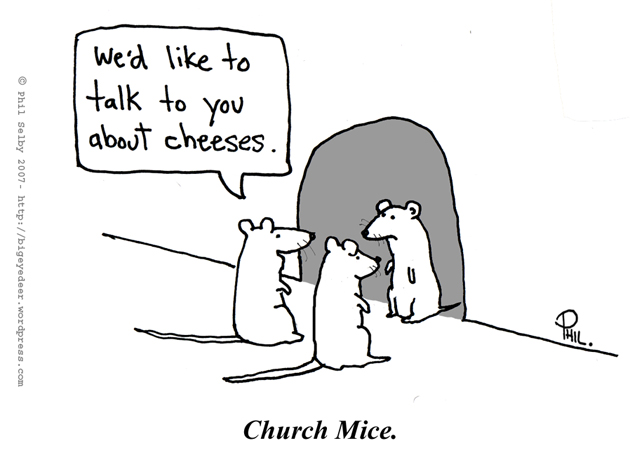
Dr. Scot McKnight has been going through our book Rethinking Hell: Readings in Evangelical Conditionalism, and its been a real honor to read his thoughts and commentary on our book. It is quite encouraging to see how well many seem to receive the text!
So here are the links:
McKnight on John Stackhouse.
McKnight on Glenn Peoples and the basic introduction to conditionalism. Check out the comments.
McKnight on "perish" and "destruction."
McKnight on Stephen Travis.
McKnight on the famous John Stott.
McKnight on Clark Pinnock.
McKnight on John Wenham.
McKnight on Ralph Bowles and Revelation 14:9-11.
McKnight on Harold Guillebaud and the trends in Scripture.
McKnight on Philip E. Hughes and "immortality."
McKnight on Christopher Marshall and 'restoration and judgment.'
Enjoy.
--Nick Quient
Showing posts with label Patheos. Show all posts
Friday, July 25, 2014
Sunday, October 27, 2013
Mark Driscoll, Pacifism & The Cross of Christ
I have a new policy. I used to write a response post to any post that offended/challenged me, and I would write it immediately. Instead, I am now trying a new tactic. I won't be writing and releasing posts daily that respond to instant current events. mostly because I want a cooler head to prevail. Its an attempt to avoid adding gasoline to an outraged internet firestorm.
So when well-known pastor Mark Driscoll decided to make pacifists angry enough to fight, I figured this was too interesting to ignore. I am not up to date on pacifist exegesis, and the strongest example I can cite that I've fully read is Richard Hay's "The Moral Vision of the New Testament." I found it compelling enough to recommend here, even if I'm still working through my thoughts on the entire topic of non-violence. So I'm a pretty big stranger to this discussion.
Below are several collected comments, written by various New Testament scholars. I will cite Richard Hays at the end to sum up. Pacifism shouldn't be assumed as my outright position. I'm merely collecting data on a debate (within evangelicalism) that I find fascinating and worthy of serious consideration, even though the framing text for Driscoll about Jesus is to be found in the book of Revelation. Personally, the Sermon on the Mount makes it somewhat difficult to see how Jesus restricts the Torah in regards to retaliation (Matthew 5).
But anyway. Each comment should be read by the links below, including Driscoll's:
Mark Driscoll:
--Nick
So when well-known pastor Mark Driscoll decided to make pacifists angry enough to fight, I figured this was too interesting to ignore. I am not up to date on pacifist exegesis, and the strongest example I can cite that I've fully read is Richard Hay's "The Moral Vision of the New Testament." I found it compelling enough to recommend here, even if I'm still working through my thoughts on the entire topic of non-violence. So I'm a pretty big stranger to this discussion.
Below are several collected comments, written by various New Testament scholars. I will cite Richard Hays at the end to sum up. Pacifism shouldn't be assumed as my outright position. I'm merely collecting data on a debate (within evangelicalism) that I find fascinating and worthy of serious consideration, even though the framing text for Driscoll about Jesus is to be found in the book of Revelation. Personally, the Sermon on the Mount makes it somewhat difficult to see how Jesus restricts the Torah in regards to retaliation (Matthew 5).
But anyway. Each comment should be read by the links below, including Driscoll's:
Mark Driscoll:
One of the defining attributes of God’s coming kingdom is shalom—perfect peace untainted by sin, violence, or bloodshed of any sort. Such a kingdom is only possible if an all-powerful, benevolent Authority vanquishes his enemies. In other words, the Prince of Peace is not a pacifist.Scot McKnight ("The King Jesus Gospel" and "Jesus Creed"):
God is the author of life and sovereign over death.
Those who want to portray Jesus as a pansy or a pacifist are prone to be very selective in the parts of the Bible they quote. But the God of the bloody Old Testament is Jesus Christ. When he became a man, he walked the earth as a working-class carpenter. The European, long-haired, dress-wearing, hippie Jesus is a bad myth from a bad artist who mistook Jesus for a community college humanities professor. But if we want to learn all about Jesus we have to read all that the Bible says about him. Here’s how Jesus will appear one day:
"Then I looked, and behold, a white cloud, and seated on the cloud one like a son of man, with a golden crown on his head, and a sharp sickle in his hand. And another angel came out of the temple, calling with a loud voice to him who sat on the cloud, “Put in your sickle, and reap, for the hour to reap has come, for the harvest of the earth is fully ripe.” So he who sat on the cloud swung his sickle across the earth, and the earth was reaped.
Then another angel came out of the temple in heaven, and he too had a sharp sickle. And another angel came out from the altar, the angel who has authority over the fire, and he called with a loud voice to the one who had the sharp sickle, “Put in your sickle and gather the clusters from the vine of the earth, for its grapes are ripe.” So the angel swung his sickle across the earth and gathered the grape harvest of the earth and threw it into the great winepress of the wrath of God. And the winepress was trodden outside the city, and blood flowed from the winepress, as high as a horse’s bridle, for 1,600 stadia" (Rev. 14:14–20).
Today is a season of patience as Jesus Christ waits for people to come to repentance. Jesus is not a pansy or a pacifist; he’s patient. He has a long wick, but the anger of his wrath is burning.
Once the wick is burned up, he is saddling up on a white horse and coming to slaughter his enemies and usher in his kingdom. Blood will flow.
Then there will be peace forever as the Prince of Peace takes his rightful throne. Some of those whose blood will flow as high as the bit in a horse’s mouth for 184 miles will be those who did not repent of their sin but did wrongly teach that Jesus was a pacifist.
Jesus is no one to mess with.
Driscoll has a flat Bible. What is in the OT is the same as the NT is the same as Jesus is the same as Paul is the same as Revelation. It’s a Bible that he believes in a text of propositions, not a Bible with a Story, and because there’s no flow to his reading of the Bible he can choose which texts best fit his moods. So he omits important elements:Preston Sprinkle ("Fight: A Christian Case for Non-Violence" and "Erasing Hell"):
1. Why not discuss Matt 5:38-42? [See my new commentary on The Sermon on the Mount.]
2. Why not discuss the “passive” Jesus in the crucifixion scenes?
3. Why not discuss 1 Peter 2 which evokes the image of Jesus as suffering as a model for others absorbing suffering?
4. Why not examine the blood of Revelation and see whose blood it is … it is Christ’s?
5. Why not learn the stories of martyrs who conquered by suffering?
6. Why not look to Dietrich Bonhoeffer — talk about manly faith?
In other words, Driscoll needs a Story and christocentrism shaped by cruciformity to read the Bible well.
Shock talk theology demeans the gospel.
I actually really like Mark Driscoll. He’s a former ball player, and so am I. He loves red meat, craft beer, and has no time for diaper wearing pansies behind the pulpit. Mark is a manly man, and since I was recently labeled a “manly pacifist,” I think we have a lot in common. Mark says it like it is. So do I. So let me say it like it is: Mark’s assumption that pacifists are pansies is historically naïve, theologically horrendous, and shows that Mark’s been more influenced by the worldview of those who put Jesus on the cross rather than the One who hung on it. Everything Mark says about violence is eerily close to what Rome said about it 2,000 years ago. Contrary to Rome, Jesus taught that suffering leads to glory, cross-shaped weakness radiates divine power, and loving your enemies showcases the character of the Father (Matthew 5:44-48).Gregory A. Boyd ("Myth of a Christian Nation"):
Mark’s selection of passages that talk about violence has been violently ripped from the cruciform flow of the New Testament itself.
While the OT allowed for, and even required, retaliation, Jesus commands us to instead love and pray for our enemies. (In Luke 6 he adds “and do good to those who hate you” [vs 27]). Rather than to ever respond to violence with violence, we’re to instead love like the sun shines and like the rain falls – namely, indiscriminately. Whether the person is a friend or life-threatening enemy, we’re to love and bless them. And Jesus makes our willingness to love like this a precondition for being considered a child of our Father in heaven – “that you may be.” By the standards of Jesus’ teaching, therefore, anyone who obeyed the OT laws requiring violence could not be considered a child of the Father in heaven.
It’s also important we notice that Jesus never qualifies who the “enemies” we’re to love are (nor does Paul in Rom 12:14-21). Indeed, his instruction to love indiscriminately rules out any possible qualifications. What makes Jesus’ teachings even more radical is that any talk about “enemies” to a Jewish audience in first century Palestine would immediate call to mind the Romans – the one’s who unjustly oppressed, abused, and often randomly killed the Jewish people. Jesus’ command to love enemies and to never respond violently to them thus includes the very worst kind of enemies we can imagine: the kind that threaten us, our country, and/or our loved ones. It includes the kind of enemies people naturally feel most “justified” killing, if they need to, in order to protect themselves. But these are precisely the kinds of enemies we’re to always love and never retaliate against.
As radical as this teaching might sound to us, however, I don’t believe it should surprise us that we’re commanded to love this way. For God loved us to the point of death when we “were yet enemies,” (Rom 5:10), and we are commanded to “imitate God” by living in this same kind of love, “just as Christ loved us and gave his life for us” (Eph. 5:1-2).
To sum it all up, in this passage Jesus is doing nothing less than telling us that our willingness to set aside a violent OT law in order to obey his new command to love and refrain from violence toward even the worst kind of life-threatening enemies is a precondition for being considered a child of God. And this, folks, is why I don’t believe Driscoll’s argument about the sixth commandment allowing for some forms of killing is relevant to followers of Jesus.
I am a bit puzzled as to why Driscoll didn’t address any of this material in his attempt to refute the idea that “God is a pacifist.” One might have thought it would be relevant since Driscoll is, after all, a Christian pastor, and he’s addressing a Christian audience. Instead, to prove that “Jesus is not a pansy or a pacifist” (one wonders if the two are not synonymous for Driscoll), he cites one passage from the book of Revelation (14:14-20). To address this, I will offer some reflections on the nature of this book in my next post, and I’ll then conclude my response in a third post by addressing the specific passage Driscoll cites.
While
the OT allowed for, and even required, retaliation, Jesus commands us
to instead love and pray for our enemies. (In Luke 6 he adds “and do
good to those who hate you” [vs 27]). Rather than to ever respond to
violence with violence, we’re to instead love like the sun shines and
like the rain falls – namely, indiscriminately. Whether the
person is a friend or life-threatening enemy, we’re to love and bless
them. And Jesus makes our willingness to love like this a precondition for being considered a child of our Father in heaven – “that you may be.”
By the standards of Jesus’ teaching, therefore, anyone who obeyed the
OT laws requiring violence could not be considered a child of the Father
in heaven.
It’s also important we notice that Jesus never qualifies who the “enemies” we’re to love are (nor does Paul in Rom 12:14-21). Indeed, his instruction to love indiscriminately rules out any possible qualifications. What makes Jesus’ teachings even more radical is that any talk about “enemies” to a Jewish audience in first century Palestine would immediate call to mind the Romans – the one’s who unjustly oppressed, abused, and often randomly killed the Jewish people. Jesus’ command to love enemies and to never respond violently to them thus includes the very worst kind of enemies we can imagine: the kind that threaten us, our country, and/or our loved ones. It includes the kind of enemies people naturally feel most “justified” killing, if they need to, in order to protect themselves. But these are precisely the kinds of enemies we’re to always love and never retaliate against.
As radical as this teaching might sound to us, however, I don’t believe it should surprise us that we’re commanded to love this way. For God loved us to the point of death when we “were yet enemies,” (Rom 5:10), and we are commanded to “imitate God” by living in this same kind of love, “just as Christ loved us and gave his life for us” (Eph. 5:1-2).
To sum it all up, in this passage Jesus is doing nothing less than telling us that our willingness to set aside a violent OT law in order to obey his new command to love and refrain from violence toward even the worst kind of life-threatening enemies is a precondition for being considered a child of God. And this, folks, is why I don’t believe Driscoll’s argument about the sixth commandment allowing for some forms of killing is relevant to followers of Jesus.
Richard B. Hays ("The Moral Vision of the New Testament" p317-346, 344):It’s also important we notice that Jesus never qualifies who the “enemies” we’re to love are (nor does Paul in Rom 12:14-21). Indeed, his instruction to love indiscriminately rules out any possible qualifications. What makes Jesus’ teachings even more radical is that any talk about “enemies” to a Jewish audience in first century Palestine would immediate call to mind the Romans – the one’s who unjustly oppressed, abused, and often randomly killed the Jewish people. Jesus’ command to love enemies and to never respond violently to them thus includes the very worst kind of enemies we can imagine: the kind that threaten us, our country, and/or our loved ones. It includes the kind of enemies people naturally feel most “justified” killing, if they need to, in order to protect themselves. But these are precisely the kinds of enemies we’re to always love and never retaliate against.
As radical as this teaching might sound to us, however, I don’t believe it should surprise us that we’re commanded to love this way. For God loved us to the point of death when we “were yet enemies,” (Rom 5:10), and we are commanded to “imitate God” by living in this same kind of love, “just as Christ loved us and gave his life for us” (Eph. 5:1-2).
To sum it all up, in this passage Jesus is doing nothing less than telling us that our willingness to set aside a violent OT law in order to obey his new command to love and refrain from violence toward even the worst kind of life-threatening enemies is a precondition for being considered a child of God. And this, folks, is why I don’t believe Driscoll’s argument about the sixth commandment allowing for some forms of killing is relevant to followers of Jesus.
I am a bit puzzled as to why Driscoll didn’t address any of this
material in his attempt to refute the idea that “God is a pacifist.” One
might have thought it would be relevant since Driscoll is, after all, a
Christian pastor, and he’s addressing a Christian audience. Instead,
to prove that “Jesus is not a pansy or a pacifist” (one wonders if the
two are not synonymous for Driscoll), he cites one passage from the book
of Revelation (14:14-20). To address this, I will offer some
reflections on the nature of this book in my next post, and I’ll then
conclude my response in a third post by addressing the specific passage
Driscoll cites.
- See more at:
http://reknew.org/2013/10/responding-to-driscolls-is-god-a-pacifist-part-i/?utm_content=buffer06a2d&utm_source=buffer&utm_medium=twitter&utm_campaign=Buffer#sthash.0viZbXkh.dpufIf we live in obedience to Jesus' command to renounce violence, the church will become where the sphere of the future of God's righteousness intersects -- and challenges -- the present tense of human existence. The meaning of the New Testament's teaching on violence will become evident only in communities of Jesus' followers who embody the costly way of peace.
While
the OT allowed for, and even required, retaliation, Jesus commands us
to instead love and pray for our enemies. (In Luke 6 he adds “and do
good to those who hate you” [vs 27]). Rather than to ever respond to
violence with violence, we’re to instead love like the sun shines and
like the rain falls – namely, indiscriminately. Whether the
person is a friend or life-threatening enemy, we’re to love and bless
them. And Jesus makes our willingness to love like this a precondition for being considered a child of our Father in heaven – “that you may be.”
By the standards of Jesus’ teaching, therefore, anyone who obeyed the
OT laws requiring violence could not be considered a child of the Father
in heaven.
It’s also important we notice that Jesus never qualifies who the “enemies” we’re to love are (nor does Paul in Rom 12:14-21). Indeed, his instruction to love indiscriminately rules out any possible qualifications. What makes Jesus’ teachings even more radical is that any talk about “enemies” to a Jewish audience in first century Palestine would immediate call to mind the Romans – the one’s who unjustly oppressed, abused, and often randomly killed the Jewish people. Jesus’ command to love enemies and to never respond violently to them thus includes the very worst kind of enemies we can imagine: the kind that threaten us, our country, and/or our loved ones. It includes the kind of enemies people naturally feel most “justified” killing, if they need to, in order to protect themselves. But these are precisely the kinds of enemies we’re to always love and never retaliate against.
As radical as this teaching might sound to us, however, I don’t believe it should surprise us that we’re commanded to love this way. For God loved us to the point of death when we “were yet enemies,” (Rom 5:10), and we are commanded to “imitate God” by living in this same kind of love, “just as Christ loved us and gave his life for us” (Eph. 5:1-2).
To sum it all up, in this passage Jesus is doing nothing less than telling us that our willingness to set aside a violent OT law in order to obey his new command to love and refrain from violence toward even the worst kind of life-threatening enemies is a precondition for being considered a child of God. And this, folks, is why I don’t believe Driscoll’s argument about the sixth commandment allowing for some forms of killing is relevant to followers of Jesus.
McKnight. Sprinkle. Boyd.It’s also important we notice that Jesus never qualifies who the “enemies” we’re to love are (nor does Paul in Rom 12:14-21). Indeed, his instruction to love indiscriminately rules out any possible qualifications. What makes Jesus’ teachings even more radical is that any talk about “enemies” to a Jewish audience in first century Palestine would immediate call to mind the Romans – the one’s who unjustly oppressed, abused, and often randomly killed the Jewish people. Jesus’ command to love enemies and to never respond violently to them thus includes the very worst kind of enemies we can imagine: the kind that threaten us, our country, and/or our loved ones. It includes the kind of enemies people naturally feel most “justified” killing, if they need to, in order to protect themselves. But these are precisely the kinds of enemies we’re to always love and never retaliate against.
As radical as this teaching might sound to us, however, I don’t believe it should surprise us that we’re commanded to love this way. For God loved us to the point of death when we “were yet enemies,” (Rom 5:10), and we are commanded to “imitate God” by living in this same kind of love, “just as Christ loved us and gave his life for us” (Eph. 5:1-2).
To sum it all up, in this passage Jesus is doing nothing less than telling us that our willingness to set aside a violent OT law in order to obey his new command to love and refrain from violence toward even the worst kind of life-threatening enemies is a precondition for being considered a child of God. And this, folks, is why I don’t believe Driscoll’s argument about the sixth commandment allowing for some forms of killing is relevant to followers of Jesus.
I am a bit puzzled as to why Driscoll didn’t address any of this
material in his attempt to refute the idea that “God is a pacifist.” One
might have thought it would be relevant since Driscoll is, after all, a
Christian pastor, and he’s addressing a Christian audience. Instead,
to prove that “Jesus is not a pansy or a pacifist” (one wonders if the
two are not synonymous for Driscoll), he cites one passage from the book
of Revelation (14:14-20). To address this, I will offer some
reflections on the nature of this book in my next post, and I’ll then
conclude my response in a third post by addressing the specific passage
Driscoll cites.
- See more at:
http://reknew.org/2013/10/responding-to-driscolls-is-god-a-pacifist-part-i/?utm_content=buffer06a2d&utm_source=buffer&utm_medium=twitter&utm_campaign=Buffer#sthash.0viZb--Nick
Saturday, February 16, 2013
What We Talk About When We Talk About Rob Bell
I think the title may be my favorite part of this post.
Moving on.
I'm excited for this little book for three reasons. My first is that the hype will likely be less hyper and so maybe the book woill be more likely to be read without any sort of premature lens. Doubtful, but maybe. You have Peter Enns breaking down the video in his own way, with a brief critique of others here. For me, I think things are far less controversial this time, but with higher stakes.
My second reason is Rob is going deeper here than he did in Love Wins, in dealing with the doctrine of God. So higher stakes, but surprisingly, the controversy has been more along the lines of "don't worry about it, he's irrelevant." Which isn't necessarily a good or bad thing this time. I think many folks who were vocally upset with Bell this time are realizing that being vocal isn't a good thing.
Finally, I like the book cover. Love Wins didn't pop, but this one did.
As a brief appendix, I am inclined to think of the following: we ought to judge the trailer by it's own merits, and thus, Bell's book in the same way. If the trailer interests you, read the book in the same way you would see the movie. If the trailer doesn't interest you, read something else.
:)
--Nick
Moving on.
I'm excited for this little book for three reasons. My first is that the hype will likely be less hyper and so maybe the book woill be more likely to be read without any sort of premature lens. Doubtful, but maybe. You have Peter Enns breaking down the video in his own way, with a brief critique of others here. For me, I think things are far less controversial this time, but with higher stakes.
My second reason is Rob is going deeper here than he did in Love Wins, in dealing with the doctrine of God. So higher stakes, but surprisingly, the controversy has been more along the lines of "don't worry about it, he's irrelevant." Which isn't necessarily a good or bad thing this time. I think many folks who were vocally upset with Bell this time are realizing that being vocal isn't a good thing.
Finally, I like the book cover. Love Wins didn't pop, but this one did.
As a brief appendix, I am inclined to think of the following: we ought to judge the trailer by it's own merits, and thus, Bell's book in the same way. If the trailer interests you, read the book in the same way you would see the movie. If the trailer doesn't interest you, read something else.
:)
--Nick
Tuesday, September 25, 2012
Jars of Clay and Outgrowing Evangelicalism
Enns:
For the rest, enjoy it here.
--Nick
In July, Dan Haseltine of Jars of ClayHonestly, this makes me wonder what is going on behind the scenes within evangelicalism. I've heard these types of stories before, with Derek Webb being a prime example., posted on his website his experience of being a Christian, a musician, and why he finds it hard–maybe more than just “hard”–to do that within the world of evangelicalism.
The band’s in a studio trying to finish their latest record–music is down, lyrics are getting polished–and Haseltine has this nagging thought, and stop me if you’ve heard this one before:
What he really wants to say probably won’t be accepted by the evangelical community because his faith experience is moving him beyond mainstream evangelical views. Yet, those outside of the evangelical mainstream, who might actually like what his band is doing, don’t know who they are because of their long connection with the evangelical subculture. This leaves him in a “middle space,” as he calls it, a socio-religious no-man’s land.Haseltine isn’t worried about what his evangelical audience might think. In fact, he’s relieved not to feel he has to bend his spirit to conform to an ideal he does not embrace. But he’s not angry. He’s just plain tired.
I am pretty weary from years of pretending to be more of something than I am. I am tired of carrying evangelical expectations on my shoulders. I have never been so sure of my faith that I was able to find a true home in the church communities where we played most of our shows. Our particular style of writing and the perspective that we have written from has not been an easy fit into an artistic community that has such a massive agenda and only a single idea of how that agenda gets accomplished. I don’t fit there. I may have at one point. I did grow up as a youth group kid wearing a t-shirt with a picture of Jesus on it. I did drive a car with a “Christian” bumper sticker on it. And at one point, I was sure of who God was, and how God operated. But I am not that way now. And so it is impossible to write from that old version of myself. I am in the middle space.
For the rest, enjoy it here.
--Nick
Monday, August 20, 2012
Kevin Miller, "Talking to Christians about Hell"
Anyone who thinks filmmaking is glamorous should try making a documentary sometime. Better yet, try promoting one.For the rest, enjoy it HERE.
For a high profile film like The Hobbit, promotion means having Peter Jackson premiere an exclusive clip to hundreds of adoring fans at Comic-Con and then flying back home to New Zealand in his private jet. For a low budget documentary like Hellbound?, it looks more like some poor schmuck (usually me) standing outside a big, black tent at a dusty, blazing hot Christian music festival handing out swag and asking—begging—people to come inside and watch our trailer.
I shouldn’t complain. As we’ve travelled to various festivals across the country, I have met literally thousands of potential viewers—something I doubt Peter Jackson ever gets to do. It’s been a fascinating, educational journey, and I’ve made plenty of new friends. But at times it’s also been frustrating. You’d think talking to Christians about hell would be a slam-dunk. But my experience has shown me it’s anything but.
Here’s a typical exchange that occurs when an unwary soul passes by our booth:
Me: “Hi there. Have you seen the trailer for our new movie?”
Unwary soul: “No, what’s it about?”
Me: “It’s a feature-length documentary that looks at the debate Christians are having about hell.”
Unwary soul (a little warier now): “Debate? What debate?”
Inside I want to scream: Haven’t you heard of Rob Bell? Don’t you know he put hell on the cover of TIME magazine last year? Have you not read Love Wins, one of the several books or some of the thousands of blog posts and news articles written about it?
Nope.
Instead of screaming, I convey the same information in calm, measured tones, hoping for that glint of recognition in their eyes. But it rarely comes. Instead I get something like, “Well, I don’t know what there is to debate. The Bible is clear. There’s a hell, and you don’t want to end up there.”
At this point I typically clench my teeth like Tom Cruise doing a close-up. Then I say something like, “If the Bible is so clear, why do so many Christians disagree on how we should interpret it?”
Confused look, often followed by, “I don’t know. I just go with the plain reading of the text.”
--Nick
Wednesday, August 15, 2012
Jeff Cook, "Could Believing in God Harm Your Soul?
Cook:
--Nick
Could Believing in God Harm Your Soul?
Throughout Christian history it has been common to judge those who do not believe in God as not simply unwise, but morally suspect. That if a person did not believe in God, this was not simply a cognitive conclusion; it was a mark against that person’s character. Yet I know many men and women who want God to exist, know far more about the philosophical arguments for God-belief than I do, yet fail to embrace theism. Such folks are by all accounts honest and often doing the best with what they have—and this is a puzzle.
Perhaps those of us who wrestle with God belief are actually in the precise place God desires us to be. Perhaps times of non-belief and the experience of God’s absence can have real value. That was my experience (which I chronicle here), it’s the experience of many I care about, and it is common experience in the Bible.
Do you think “believing in God” can be detrimental to faith, God-belief, the soul — as Jeff Cook explains this in the post? Can God-belief diminish desire for God?I love Jeff's writings and have followed him for the past few months. It is his honesty and passionate search for truth that I value most. I'm looking forward to reviewing his new book. You can finish the rest of this post HERE.
God’s hiddenness points to the fact that God values our desires more than our beliefs. I have argued over the past month that wanting God to exist is more important than believing in God (here and here), because I hold that pursuits of the heart are more important than rational deductions and one’s ontology. Both are important of course, but I think there are good reasons for seeing reason as secondary. In my own experience, the material that moved me most in reconsidering God belief was all about desire and it came form a French mathematician named Blaise Pascal.
I can hear it now, “What, the wager guy?” If all you know of Pascal is the Wager Argument prepare to have your heart explode. I have placed some of the Pensees below in an order that I find compelling, and because Pascal’s quotes are so good I couldn’t help adding my reflections in brackets to push the argument. I would love to hear your thoughts, particularly from those of you who have trouble believing in God.
--Nick
Tuesday, August 7, 2012
Tony Jones & the Progressive Christian Blog Challenge
Jones:
I’ve been writing recently about the problems with liberal Christianity, and I had a thought this morning. It was prompted by a recent phone conversation I had with the managing editor of a major publishing house, combined with my faithful listening to the Theology Nerd Throwdown podcast, and the silliness of all the hand-wringing about Chik-fil-A.
These have prompted me to think that progressives have a God-talk problem. That is, progressives write lots of books and blog posts about social issues, the church, culture, and society. But we don’t write that much about God. That is, we don’t say substantive things about who God is, what God does, etc.
You might say the same thing about conservative Protestants (i.e., “evangelicals”). But the thing is, their people pretty much know what they think of God. It’s well-known and on the record.
Progressive/liberal/mainline theology, on the other hand, has a PR problem. We might think that people know what we think about God, but they don’t. It’s clear in the comments on this blog and elsewhere.
It really struck me yesterday, when listening to a recent edition of the TNT podcast, in which Tripp repeatedly and forcefully said things about who God is and how God acts. He didn’t relativize those statements with qualifiers, and he didn’t cowtow to political correctness or academic jargon. That was jarring to me because it so rarely happens.
Thus, I have a challenge:
I challenge all progressive theo-bloggers to write one post about God between now and August 15.
For me, I'm quite curious to see what my progressive brothers and sisters come up with. As someone who doesn't really consider himself progressive, I'd love to see how this would unfold. What attributes of God are de/emphasized, etc. Should make for an amazing discussion.
Oh course, why should progressive bloggers have all the fun? ;)
Friday, July 13, 2012
Peter Enns, "The Most Important Chapter in the Entire Bible"
Enns:
Let's not forget, Paul took Peter down a notch in Galatians 2, having "opposed him to his face" and that in spite of this, Peter called all of Paul's letter's "scripture" in 2 Peter 3 (which I've heard may not have been written by Peter; will investigate). Either way, Peter calling Paul's letters "scripture" seems quite invigorating, considering Paul's letters likely included Galatians.
It seems that Paul gets all the credit for spreading the Gospel to the Gentiles, but Peter's conformation of Cornelius strikes me as something Paul would've loved.
For the rest, click HERE.
--Nick
Don’t you hate blog posts that start like this, with such an exaggerated claim? So do I.For myself, I don't disagree. I think Peter's realization of the spreading and influence of the resurrection of the crucified God indeed provides a massive paradigm shift. Let's not forget, Peter is concerned about Jewish identify. For the option of salvation to be offered to a gentile, gifted by the Holy Spirit, must've been a massive shock.
Oh well.
I could have said this post will make you rich and famous, but I’m holding back. Still, there is one chapter, in the New Testament, that I think is majorly huge–without it Christianity as we know does not exist. And here’s the chapter. Ready?
Acts 10.
Bet you didn’t see that coming. Bet you thought I was going to pick something about Jesus’ birth, crucifixion, or resurrection. But I didn’t, did I?
Without Acts 10, you don’t go to church on Sunday, have summer youth missions trips, hymnals, cathedrals, Vacation Bible School, or Contemporary Christian Music. Heck, since so much of western culture reflects nearly 2000 years of Christian influence (and dominance, for ill and good), you could say that without Acts 10, the west as we know it doesn’t exist.
How is t[h]at? Before Acts 10, followers of Jesus were almost exclusively (maybe entirely) Jewish. From Acts 10 on, Gentiles come pouring in as equal members. So, it’s a big deal.
In Acts 10, the Apostle Peter has a vision of a large sheet being lowered from heaven by its four corners. On that sheet were all sorts of animals considered unclean in Judaism. A voice told Peter to “kill and eat.” Even though Peter was hungry, he said, “By no means, Lord; for I have never eaten anything that is profane or unclean.” Peter was a good Jew who stuck to ancient Jewish law about not eating “unclean” animals.
Peter was also a bit clueless at first about what this vision meant, but he would quickly understand that the ritually unclean animals in the vision symbolized Gentiles. At a time when maintaining ritual purity was a major concern (to distance Judaism from Roman culture), a vision like this was bound to signal a major transition.
No wonder Peter was confused. Why, after all, would God cancel out a law that God himself had commanded the ancient Israelites to keep?
Let's not forget, Paul took Peter down a notch in Galatians 2, having "opposed him to his face" and that in spite of this, Peter called all of Paul's letter's "scripture" in 2 Peter 3 (which I've heard may not have been written by Peter; will investigate). Either way, Peter calling Paul's letters "scripture" seems quite invigorating, considering Paul's letters likely included Galatians.
It seems that Paul gets all the credit for spreading the Gospel to the Gentiles, but Peter's conformation of Cornelius strikes me as something Paul would've loved.
For the rest, click HERE.
--Nick
Monday, July 2, 2012
Olson, "Confessions of a Christian Humanist"
Olson:
--Nick
I confess it. I’m a Christian humanist.For the rest, click HERE.
Some years ago I saw an article in a fundamentalist denomination’s magazine entitled “Are You a Christian Humanist?” Having long considered myself one, and thinking most fundamentalist Christians probably aren’t, I began reading the article with interest. The author, a pastor, defined “Christian humanist” as a person who (among other things) watches TV more than reads the Bible. Needless to say, I was disappointed.
The phrase “Christian humanism” has a long and honorable pedigree. It was first attached (so far as I know) to the “philosophy of Christ” of Desiderius Erasmus during the Reformation. Later, in response to the rise of secular humanism especially in the 1930s “Christian humanism” was used to label the Christian alternative by, among others, Catholic thinker Jacques Maritain who wrote Integral Humanism in 1936. That book was a response to the 1933 “Humanist Manifesto.” (A version of Maritain’s thought about humanism was published in 1938 in the U.S. under the title True Humanism. According to its Preface it is based on a series of lectures; the preface doesn’t mention the 1936 book.)
Since Maritain’s exposition of Christian humanism, numerous Christian scholars have adopted the phrase and published books and articles on the subject. For evangelicals, one of the most prominent was J. I. Packer’s and Thomas Howard’s Christianity: The True Humanism (1985).
In its January, 1982 issue, Eternity magazine (of blessed memory, may it RIP), published “A Christian Humanist Manifesto” in direct response to the (secular) Humanist Manifesto II of 1973. But also in response to the fundamentalist and conservative evangelical attacks on “humanism” as essentially pernicious throughout the 1970s and into the 1980s. (Many of you may not be old enough to remember that campaign to vilify all “humanism” as evil led by the likes of Tim LaHaye and others. According to them, “humanism” is to be found barely hidden in public school textbooks. For several years conservative evangelicals especially sought for and found “humanism” hanging on every doorknob including in Christian colleges. It was a major impetus for the then growing home schooling movement.)
Eternity’s prologue to its Christian Humanist Manifesto noted that secular humanism is a real danger to society and not “a fundamentalist fantasy” even though “some of the attack on secular humanism offered by Christians has been shallow and misinformed.” Its Manifesto was written by Eternity’s editors in consultation with a stellar list of evangelical leaders including Donald Bloesch, Bernard Ramm, Arthur Holmes, J. I. Packer, James Sire and Richard Bube.
The Christian Humanist Manifesto deserves much wider dissemination and discussion than it received. I think it is still a valuable resource for Christian unity amid diversity in a Western world increasingly dominated by secularism. Unfortunately, in my experience, most Christians still think of “humanism” as essentially bad; they equate it with secular humanism and atheism. Almost completely forgotten except among Christian scholars is that Christianity is the “true humanism” rooted in Scripture (e.g., Psalms and especially in Scripture’s witness to the imago dei.
--Nick
Thursday, June 28, 2012
Christian Smith, "The Narcissism of Small Differences"
Christian Smith:
--Nick
There is something very strange about the Reformed Protestant world in which I grew up and which I have since left. By “Reformed Protestant world” here I mean circles of conservative Presbyterianism represented by institutions such as Westminster Theological Seminary, the Orthodox Presbyterian Church (OPC), the Presbyterian Church in America (PCA), the “neo-Reformed” movement, and so on.
I am sure that these dynamics apply in many non-Reformed and non-Presbyterian circles, but I limit what I say here to them, since I know them best.
Almost all of the people that I know in this world are really good folk. I owe a great deal to them. But for some odd reason, they do love to make huge controversies out of minor issues. The smallest points of doctrine become major subjects of storm and battle. Endless attention and energy gets spent on matters that, with a bit of distance, are clearly tempests in teapots.
Doctrinal controversy seems almost to function as a form of community entertainment, something to prevent things from getting too boring. So, various of them continually “bringing charges against” others of them in their congregations or presbyteries within the denominational “court systems,” which seems to be a never-ending source of interest.
I have always chalked up these pervasive making-mountains-out-of-molehills tendencies to a kind of subcultural trauma suffered during the early-twentieth-century modernist-fundamentalist battles, in which the conservative Presbyterians were trounced in the 1920s—and in particular to losing Princeton Theological Seminary to the liberals (which gave rise to Westminster Seminary).
A kind of post-traumatic-stress syndrome beset the conservative Presbyterian subculture from that trauma, it seems to me, which gave rise to the kind of nervous “doctrinal legalism” that continues today. (Limiting “leadership” to [de facto] white males—the homogeneity of the composition of annual General Assembly photos published in denominational magazines is astounding!— cannot help either, seeing how that tends to skew discussion more toward “principles” than relationships, but that is another story.)
Recently, however, I came across a concept in psychology that I think sheds illuminating light on the tendencies described above: the narcissism of small differences. Now, I am no advocate of allowing psychology to colonize Christian truth—far too much of that has already happened in both mainline and evangelical Christianity. But the narcissism of small differences is too revealing to be ignored.
The term was coined by Sigmund Freud (which unfortunately means that those who most need to understand it will be the least willing to take it seriously). The basic idea is this: groups of people are often most sensitive and snotty toward those who they are most socially alike.For the rest, click HERE.
Human groups do not have their fiercest conflicts with those who are quite different from them. Instead, they display the greatest pettiness and viciousness in fighting those who they look the most like.
--Nick
Sunday, June 24, 2012
Jeff Cook, "C.S. Lewis, Rob Bell & 'Love Wins'"
Nick:
This is something I've been mulling over for a few weeks. I think I agree with most of what Cook says about Bell. I don't see much difference between Bell and Lewis, though there are nuances. Bell seems for more hopeful about God potentially saving all, whereas Lewis had a more pessimistic streak about such things.
McKnight:This post is by a friend of the Jesus Creed blog; Jeff’s got a strong point to make about Rob Bell’s new book and the seeming culture war at work in the responses. He isn’t suggesting that such a battle is all that is in play, and I’m asking us to give his post a very careful hearing and reading. I’m not enough of a CS Lewis expert to give a definitive answer, though I always have thought the end of The Last Battle went in a universalistic direction. Perhaps we can have some CS Lewis experts speak up today.Cook:
Rob Bell, CS Lewis, and the Real Argument at Hand
After a couple of weeks of dialogue it is clear to me that the primary issue in the debate over Love Wins: A Book About Heaven, Hell, and the Fate of Every Person Who Ever Lived is not about what Bell is saying, but how he says it.
I suspect many felt poked in the eye by the way Harper and Rob decided to market Love Wins. I suspect Bell intimidates some because he is part of a culture they do not understand and cannot control (that culture is urban, postmodern, and discovers the truth more naturally through questions, sarcasm, and intuition than through the systematic presentations of the top Christian publishing house).
And let’s not kid ourselves, I suspect the fire behind the debate is often about envy and resentment of a very talented man, about our own inability to get a hearing in the public square, and about the fear that new ways of talking about Jesus might trump what some have preached for decades.
These issues are big, but they are not only about doctrine. The issues at hand are about culture and control, about how the theology of emerging Christians will be defined, and about the continuing fight between postmodern and modern expressions of Christianity. This seems clear to me now, for I would like to defend the following claim:For the rest, click HERE.
There’s not one controversial idea in Love Wins that is not clearly voiced as a real possibility by the most popular evangelical writer of the last century, CS Lewis.
Lewis and Bell hint at a number of theological possibilities in their writings that cut against what we might call the majority opinion, including: the possibility that those in hell might journey toward the grace of God after death, the possibility that those who have not heard the name of Jesus might find salvation in and through the image of Christ in their own pagan stories and myths, the possibility that some will eventually receive God’s grace freely after death, the possibility that hell is about bigger things than God’s wrath, the insistence that the metaphors describing what Jesus’ cross accomplishes and how his work is applied to us are culturally subjective, and that some ancient pictures of the atonement may be too confusing to help us right here, right now. All of these lines of thought were in Lewis’s writings before they were in Love Wins.
Let’s look at one example. Though I [Jeff Cook] do not hold the following position (I’m an annihilationist regarding hell), consider how Lewis, like Bell, advances the possibility that those in hell might one day journey toward the grace of God after death. Lewis writes, “I would pay any price to be able to say ‘All will be saved’ but my reason retorts, ‘Without their will, or with it?’” Notice in this and other quotes like it, the salvation of a soul is not dependent on God’s will, but the will of the damned. In the same vein, he wrote, “I believe that if a million chances were likely to do good, they would be given” (The Problem of Pain, 110). This is a confession that God wants to save all and would provide such roads if God thought they’d work.
--Nick
Saturday, June 23, 2012
Olson's Respond to Fischer's "Calvinism"
Olson:
--Nick
I do agree with much of what Austin wrote. In fact, I agree with the substance of it. I think a lot of critics of his post entirely missed his concluding remarks (criticisms) about “moderate” preaching–that it is sometimes too weak and lacking confidence in its own gospel message.For the rest, click HERE.
I have a one frame cartoon from (I think) Leadership magazine (years ago) showing a bespectacled minister sitting at his church office desk. Behind him is an attendance chart showing Sunday attendance at his church declining steeply. Across from his desk sits someone (a deacon?) saying “Well, pastor, maybe it would help if you didn’t end every sermon with ‘But then, what do I know’?”
But another one shows a church custodian cleaning up around the pulpit on a Monday and seeing a post-it note in the pastor’s handwriting on the pulpit saying “Weak point, pound pulpit here.”
Austin rightly called for the current crop of “neo-Calvinist” preachers to preach with less certainty and authority (because what they are preaching is often opinion) and moderates to preach with more assurance and confidence (of the gospel).
I will stop speaking for Austin (and ask him to correct me if I got him wrong) and add my own commentary on the subject.
Yes, as some commenters here have rightly pointed out, Arminian preachers can also preach with over-reaching certainty that leaves no room for disagreement or doubt (that is, calling into question a person’s spirituality if not salvation for disagreeing or doubting). That’s just not currently as much of a problem with college students (especially) who are flocking to student conferences attended by upwards of twenty-to-thirty thousand students who hear neo-Calvinist (or whatever they should be called) preachers proclaim Calvinism as if it were the gospel itself and saying things like “If you received Jesus Christ for any other reason than the glory of God you might not be saved” and “Godordained sin” and “Christ died for God and not for you” and “If a dirty bomb fell on a city it would be from God,” etc., etc. (These are statements students returning from these conference and ones like them have reported hearing.)
--Nick
Tuesday, June 12, 2012
Roger Olson, "Problems with Inerrancy"
Roger Olson:
--Nick
Notice I put “inerrancy” in “scare quotes.” That’s to indicate that what I am talking about is the term, not precisely the concept. Or, to put it another way, my concern is that the term is used for many different concepts and therefore, without definition, is virtually meaningless.For the rest, click HERE.
Now I am going to quote a leading evangelical theologian’s definition of biblical inerrancy. I’m not revealing his name first; his identity as the definition’s author is below it. I challenge you to read the definition first and only then see who wrote it. And before peeking at the author’s name, formulate an opinion about it. Is the definition what you thought “inerrancy” means? Is it what leading conservative evangelical inerrantist theologians mean? How many would agree with it?
Here is the definition which is copyrighted, but the author’s web site gives permission to disseminate it with the copyright line following. I also provide, as requested, a link to the source of the definition at the author’s web site. (However, I first encountered it elsewhere; it was given to me by a colleague many years ago.)
The definition:
“I. The Word of God
“The Bible is…without error in the original manuscripts…” Since there is a wide diversity of opinions on the meaning of “error” in such an affirmation, it is appropriate that I give my understanding of the word in this context so that you know what I am affirming.
I will suggest two definitions of “error”, the first of which I consider proper for judging the reliability of any literature including the Bible and the second of which I consider improper. According to the first I believe the Bible is “without error”.
1) A writer is in error when the basic intention in his statements and admonitions, properly understood in their nearer and wider context, is not true. (In reference to indicative statements, “true” means they correspond to reality; in reference to admonitions “true” means that obedience of these admonitions is in harmony with reality, i.e., it accords with the will of God.)
2) A writer is in error if any of his individual statements are not literally true.
The difference between these two definitions and my own understanding of the truth of the Bible may be clarified by three illustrations from Scripture. (To many of my fellow theologians the following would sound elementary to the point of being superfluous. But in my tradition it is a necessary starting point if we are to come to properly understand our affirmation on Scripture.)
A) God says against Jerusalem through Jeremiah (15:8), “I have made their widows more in number than the sand of the sea.” This statement is “literally” false. But according to definition 1 above, it is not false since the basic intention of Jeremiah is to press home (by an exaggeration which had become a commonplace analogy in the Old Testament) the tragically large number of widows as a sign of God’s judgment.
B) Jesus says in Mark 4:31 that the Kingdom of God “is like a grain of mustard seed which when sown upon the ground is the smallest of all the seeds on earth…” According to definition 2 above, Jesus erred here because the mustard seed is not the smallest seed on the earth. But according to the first definition he did not err because his basic intention was not in the least botanical. The point is the great contrast between the smallness of the seed and the largeness of the full-grown shrub. Jesus capitalized on the proverbial smallness of the mustard seed (TWNT, VII, p. 288) to make a perfect, inerrant point about the Kingdom of God.
C) If we used definition 2 above the Gospel writers would have to be accused of error in their chronology of events of Jesus’ life. Just one illustration: The story of the healing of the paralytic (Mt. 9:1-8 = Mk 2:1-12 = Lk 5:17-26), the call of Levi (Mt 9:9-13 = Mk 2:13-17 = Lk 5:27-32), and the question about fasting (Mt 9:14-47 = Mk 2:18-22 = Lk 5:33-39) follow back to back in all three Synoptics and so refer to the same events. Again, the stilling of the storm (Mt 8:23-27 = Mk 4:35-41 = Lk 8:22-25) and the Gesarene demoniac (Mt 8:28 = Mk 5:1-20 = Lk 8:26-39) follow back to back in all three Synoptics so that with the verbal parallels one can see that the same sequence of events is being referred to in each Gospel. But Matthew has these last two events before the three cited above. While Mark and Luke have them after these three events. It cannot be both ways.
--Nick
Saturday, June 9, 2012
Roger Olson, "Inerrancy"
Olson:
--Nick
What does “inerrancy” actually do?For the rest, click HERE.
During this week’s brouhaha over possible semi-Pelagianism among Southern Baptist theologians (see the previous two posts and the comments here), one response has stuck in my mind and given me reason to worry. It worries me more than the possibility of semi-Pelagianism in the ranks of the theologians.
I confess that throughout this budding controversy I have occasionally broken a personal policy. Normally I do not go to other blogs to see what others are saying about the subjects we talk about here. But the policy isn’t iron clad; it’s not a rule, just a rule of thumb to protect my time. If I went to every blog someone recommends I read, I’d never get anything else done. So, normally, I only go if the blog is by someone I respect or whose opinions I consider influential and the subject is directly relevant to a matter I’m working on here.
This week I followed a link one commenter provided to a blog containing quotes by leading Baptist theologians about this issue of possible semi-Pelagianism among non-Calvinist Southern Baptist theologians. One of those quotes was from a Southern Baptist seminary president’s blog. (Don’t try to drag a name out of me or even mention possible ones; I’m not interested in personalities here. I’m talking about ideas.)
The well-known seminary president began this particular blog post by congratulating the Southern Baptist theologians he was about to criticize for at least believing in the inerrancy of the Bible. He said he was glad to be having this conversation with them (over grace and free will) because at least they and he agree on biblical inerrancy.
Two things caught my attention about that and made me worry. First, why didn’t the seminary president begin by saying at least he and his debate partners agree about Jesus Christ or salvation by grace? Why jump immediately and directly to the Bible—and a particular theory about the Bible?
--Nick
Friday, June 8, 2012
Tony Jones, "A Better Atonement" Free Today!
Well, I've been a follower of Tony for over a year now, and he's releases his e-book "A Better Atonement" for free off Amazon today. June 8th. Go. Go get it. Free book. Shoo.
Tony:
For today only, I’m running a Just Because Sale on my book, A Better Atonement: Beyond the Depraved Doctrine of Original Sin. In fact, it’s not just on sale — it’s free!Oh, and this is post 300 for me. Thanks for your time and effort. ;)
It’s only available for the Kindle — but even if you don’t own a Kindle, you can read Kindle books on just about any device. Go here to download the Kindle software for your device. Free Today!And stay tuned, because I’m going to release a revised and updated version of A Better Atonement next Ash Wednesday. If there are oversights in this version, or topics you’d like me to cover in that version, please leave a comment here or contact me through my website. While there, you can check out my other books.
--Nick
McKnight, "When is the Gospel at Stake?"
McKnight:
--Nick
I’m bouncing off a post that claims too many Christians are Chicken Littles because they run around claiming and worrying and showing their faithfulness by saying the sky is falling down all the time. That is, they think the gospel is at stake in every conversation.For the rest, and McKnight's four points, click HERE.
Deny inerrancy? The gospel is at stake. Deny the KJV/ESV, accept the TNIV/NIV? The gospel is at stake. Deny penal substitution? The gospel is at stake. Deny the real presence? The gospel is at stake. Deny the centrality of justification by faith? The gospel is at stake. Deny Athanasius or Augustine or Luther or Calvin or Edwards or Wesley? The gospel is at stake. Enough already.
The gospel is at stake when central themes of the gospel — as defined by the New Testament, that is by Jesus and the apostles — are denied. At the core of the gospel is Jesus as Messiah/King and Lord. The central question of the gospel is Who is Jesus? not What is my theory of salvation?
As I have sketched in The King Jesus Gospel, here are the central themes of the gospel and I will connect this to 1 Corinthians 15:1-28.
--Nick
Friday, June 1, 2012
Roger Olson, "Why I still call Myself a Baptist."
Olson:
--Nick
Some of my theological friends criticize me for holding on to my “Baptist” identity in the current theological and political context (especially the U.S.A.) where these labels have largely come to mean mean-spirited, narrow-minded, legalistic, even hypocritical religiosity and where they are virtually equated with the Religious Right, of which I am not a part.For the rest, click HERE.
Many Baptist churches have dropped the word “Baptist” from their names because it has been so tarnished by television evangelists, right-wing religious politicians and the so-called “Baptist wars” of the last twenty-five to thirty-five years.
--Nick
Tuesday, May 29, 2012
Peter Enns, "Did Paul have a High View of Scripture?"
As always, I tip my hat to Peter Enns.
Yes, of course he did. He was a Jew trained in the traditions of his people. In fact, he had such a high view of scripture, for a while there he was trying to put to death those annoying Christ-followers who undermined it.
That high view of scripture was not abandoned when Paul became a follower of Jesus himself. It was just transformed and utterly refocused.
Paul had a high view of scripture. It’s just doesn’t look like what conservative Evangelicals insist on when they talk about a high view of scripture.
For Paul, his scripture–the story of Israel–come to its conclusion in the death and resurrection of Jesus and the creation of a new people of God made up of Jew and Gentile on equal footing. But that conclusion could only be seen in hindsight. It wasn’t obvious. That’s why Paul had to argue his case, and, as I mentioned in my previous post, Paul had to make some deft moves to bring Israel’s story into the story of Jesus.
What we’ve got here is, for modern Evangelicals, a bit of a paradox: Paul no doubt deeply respected Israel’s story as God’s Word, but that Word now had to be re-read, because of what God did in and through Jesus did not follow the playbook.
A messiah who died and then rose from the dead. Two problems here:
1. The messianic hope of Judaism was basically (it’s a more complicated than this) of a king like the good old days; a military leader who would rid the land of its current squatters, the Romans, so the people of God could get their independence back.
2. This messiah would set an example for God’s people by living according to God’s Law, thus ushering in a new age of peace and communion with God.
Land and Law. These were connected. Israel lost the land to the Babylonians in the 6th century BC because of their failure to be faithful to God’s Law. Hence, to get it back–I mean actually get it back fully, not just be guests of the Romans–faithfulness to the Law was a big deal.For the rest, click HERE.
--Nick
Friday, May 25, 2012
"Would Paul Have Made a Good Evangelical?"
I thought this was pretty awesome.
Enns:
No.
Even when you account for 2000 years of cultural differences between Paul and Evangelicalism, the answer is no.
Why? Because Paul didn’t treat the Bible the way mainstream Evangelicalism says you need to.
The way Paul handled his Bible–what we call the Old Testament–would keep him off the short list for openings to teach Bible in many Evangelical seminaraies and Christian colleges. Heck, John Piper, John MacArthur, and R. C. Sproul probably wouldn’t let Paul lead a home Bible study, at least not without supervision.
Here is the main reason why:
You
see, Paul had a monumental theological and hermeneutical task before
him. The Old Testament is centered on Israel’s need for obedience to
the law of Moses in order to stay in God’s favor–what the Old Testament
often calls “life.” God’s favor is most clearly demonstrated by Israel’s
remaining in the Promised Land–if they obey, they stay; if they
disobey, the are cast out (which is what the exile to Babylon was all
about). And, as an added benefit, when Israel is faithful to God, the
other nations will take notice and also bend the knee to Yahweh,
Israel’s God.
Obedience to law; holding onto the land (and along with it worship in the temple); conversion of the Gentiles. All central elements of being an Israelite.
The Gospel of Christ that Paul preached said:
For the rest,
Peter Enns.
--Nick
Enns:
No.
Even when you account for 2000 years of cultural differences between Paul and Evangelicalism, the answer is no.
Why? Because Paul didn’t treat the Bible the way mainstream Evangelicalism says you need to.
The way Paul handled his Bible–what we call the Old Testament–would keep him off the short list for openings to teach Bible in many Evangelical seminaraies and Christian colleges. Heck, John Piper, John MacArthur, and R. C. Sproul probably wouldn’t let Paul lead a home Bible study, at least not without supervision.
Here is the main reason why:
For Evangelicals, the Old Testament leads to the Gospel story. For Paul, the Old Testament is transformed by the Gospel.
For
Evangelicals, the Old Testament, read pretty much at face value,
anticipates Jesus. For Paul, the Old Testament is reshaped in order to
conform to Jesus.
For Evangelicals, the Bible is God’s final authority. For Paul, Jesus is the final authority to which the Bible must bend.
Obedience to law; holding onto the land (and along with it worship in the temple); conversion of the Gentiles. All central elements of being an Israelite.
The Gospel of Christ that Paul preached said:
Law was a parenthesis, a temporary measure; holding on to land is now a non-issue; Gentiles can claim Israel’s God as their own as Gentiles.Clearly something has to give. For Paul, it was the Old Testament.
For the rest,
Peter Enns.
--Nick
Tuesday, May 22, 2012
"How to Talk about the Afterlife; if you must"
A very interesting set of theses. I posted the first one, and there are nine others. I think the dude abides with these. ;)
Ten Theses to Guide Debate on the Afterlife
This
post is by D. C. Cramer, who is a PhD student in religion with an
emphasis in theological ethics at Baylor University, a pastor in the
Missionary Church denomination, and a regular participant in the Jesus
Creed community.
The following are some theses—in no
particular order—that I believe should help guide discussions of the
afterlife, especially those debates currently raging over universalism
and hell. These thoughts are purely my own (and even I’m not sure what I
think of all of them). By stating these theses, I am not advocating or endorsing any of the views of the afterlife discussed.
Which theses do you (dis)agree with? Why? Are there any theses you would add to this list?
(1) Every view of the afterlife involves some amount of speculation.
True, some views might be more speculative than others, but the level
of speculation doesn’t necessarily determine the truth of a view. No
view, however seemingly speculative, should be dismissed or taken as a
given until all arguments—biblical, theological, and philosophical—have
been carefully considered.
For the rest, go to McKnight's POST.
Subscribe to:
Posts (Atom)